 GoalGlance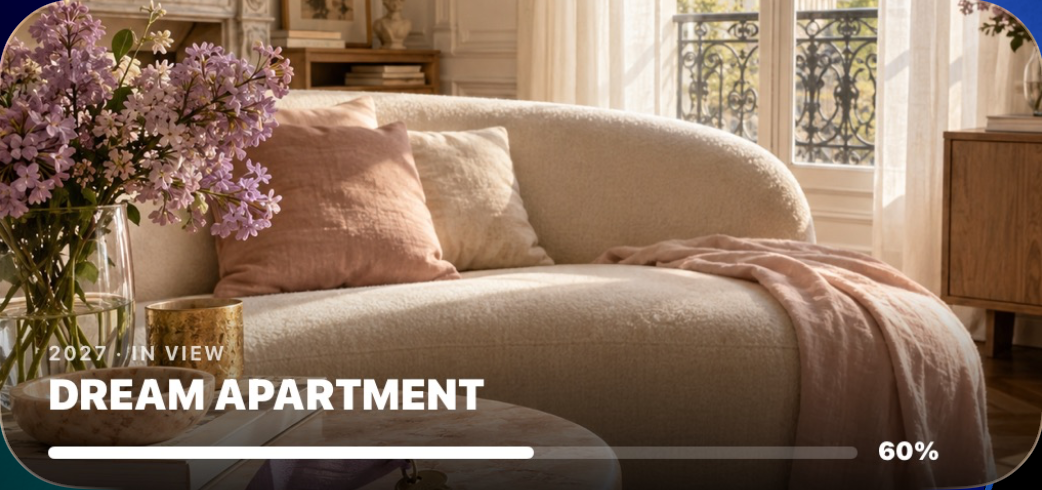
Begin with an ordinary day
Picture arriving home after work. Where do you put your bag? Is there somewhere to cook? Do you want quiet, company, daylight or easy access to a favourite neighbourhood? Write these observations before searching for interior photos.
This keeps the board connected to your life. A huge living room may look beautiful but say little about what matters to you. A small table near a window might capture it more accurately.
Make three separate lists
- Essentials: the conditions you need to consider a place, such as an acceptable commute or enough room for a desk.
- Preferences: features you would enjoy but could trade off, such as a balcony or a particular style of kitchen.
- Things you can add: a lamp, bedding, plants or a reading corner.
Write your own criteria rather than adopting someone else’s. These categories are a planning exercise, not advice about which property or contract to choose.
Build a small, readable board
Try one image of a room, one detail and one scene from the surrounding area. Add a phrase such as “A calm place to come home to”. You can keep a larger collection separately; these three images are a way to express your priorities.
Under each image, add a sentence to your notes. “Morning light” is a feature to check; “Sunday breakfast at home” is an experience you can create in different kinds of spaces. This distinction leaves room for an apartment that works even if it does not look exactly like the photo.
Turn it into a viewing brief
Before a viewing, use the board to make questions. Where would the desk fit? What is the actual journey to work? Which features in the photos are present, and which would require changes? Record what you see instead of assuming the atmosphere in a listing photo tells the whole story.
Keep practical records separate from the inspiration board. A list of requirements, verified costs and open questions is easier to compare than a set of pictures alone. Our visual savings tracker guide explains how to display a goal amount once you have chosen one.
Put one intention on your phone
Choose the image that carries the strongest meaning and use it as your current reminder. GoalGlance’s Vision Board widget is a Premium option. If your immediate focus is a target amount, you can begin with the free Progress widget instead.
Once you have a confirmed moving date, a countdown widget can show that different stage of the project. Avoid using an arbitrary date as a promise that you must find the perfect place by then.
Keep room for your priorities to change
After visiting places, revisit your essentials and preferences. You may discover that a shorter commute matters more than a feature you originally loved. Changing the board can reflect better information rather than a smaller ambition.
If your housing project is only one part of a bigger transition, explore these other vision board themes. You can keep your home board focused while giving work or travel their own space.