 GoalGlance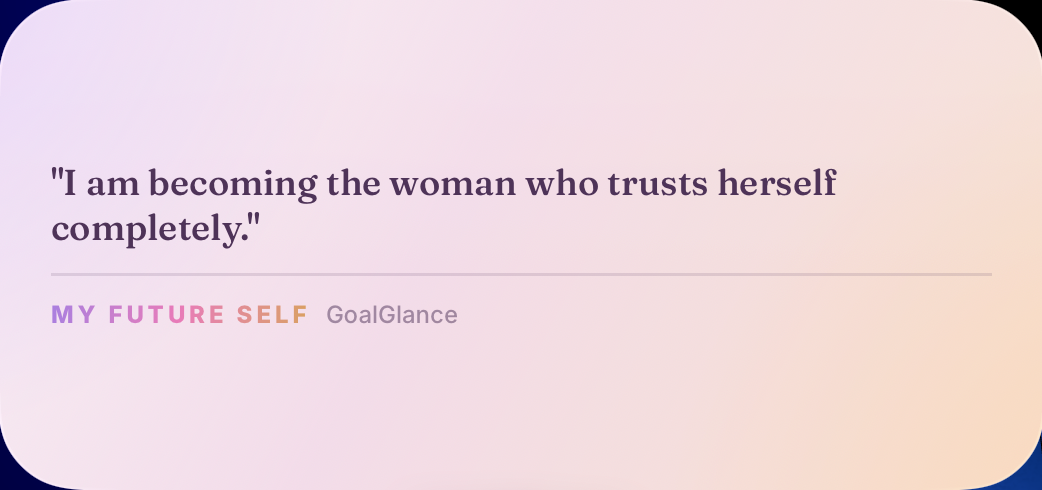
Before an interview
- “I can explain what I bring.” Prepare one example of work you are proud of.
- “I can take a moment before answering.” Practise saying that you would like a moment to think.
- “I am also learning whether this fits me.” Write down two questions about the role.
These phrases do not predict an offer. They give you something to return to while preparing. Keep the examples you plan to discuss in a separate note; a widget is too small for your interview outline.
During the first weeks of a job
- “I’m allowed to ask how this works.” Identify the person who can clarify a task.
- “Learning is part of starting.” Keep a short list of terms or processes to revisit.
- “I can check the priority before rushing.” Ask which result is needed first.
You may prefer a plain instruction to an affirmation. “Ask what done looks like” can be more useful than a broad statement about success. The sentence should suit you, not a particular style of motivational writing.
When you want to speak up
Try “My point is worth sharing” or “I can contribute one clear idea”. Before a meeting, write that idea in a sentence. Decide where it connects to the agenda so you have an opening.
When the conversation moves on or you choose not to speak, the reminder does not become a test you failed. You can still send a question afterwards or prepare for another opportunity. Choose the action that makes sense in your workplace.
Write one for a career change
Complete three lines: “I want more of…”, “I want less of…” and “One thing I can investigate is…”. For example: more creative work, less commuting, and a conversation with someone in a different role.
A matching phrase could be “I can explore before deciding”. This keeps room for uncertainty. A career-themed vision board can represent the workday you want; the phrase can remind you of the next investigation.
Use the phone as a reminder, not a script
Pick one sentence for your current situation. Follow the affirmation widget guide to make it readable. If a colleague could see your screen, use wording you would feel comfortable displaying.
Keep confidential names, employer information and interview details out of public-facing screenshots. A neutral line can still have a specific meaning for you. You do not need to display the whole career plan.
What these examples can and cannot do
These are original writing prompts, not psychological treatment or promises of career outcomes. A phrase does not replace preparation, feedback or a decision about whether a role suits you.
For a more structured reflection, use our visualization exercise to connect the situation you want with an obstacle and a next step. Then choose whether a sentence, an image or a practical checklist is the most useful reminder.